Written by:
Louise has worked across digital publishing, content marketing, and media, producing blog articles, news features, and educational resources. Her background includes writing for financial education platforms, technology publications, and global content teams. She has experience creating content for diverse audiences across international markets, adapting tone and structure to meet regional and platform-specific requirements. At WhereiPark, she produces content focused on parking, cost-saving strategies, and location-based services across the U.S. and Canada. Have any questions about content that you’d like to ask Louise? Drop her an email at Louise@spacer.com.
 Edited by:
The Spacer Technologies content team is a dedicated group of writers and experts with a deep-rooted passion for the sharing economy.
Learn what a residential parking permit (RPP) is, who needs it, and how to apply in the US and Canada. Step-by-step guide for residents and visitors.
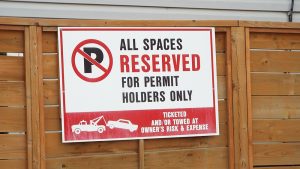
Parking can be a persistent challenge in many urban and densely populated residential areas across the United States and Canada. Streets that are close to transit hubs, commercial zones, or city centers often have limited curb space, which leads local governments to implement regulated parking systems.
One such system is the residential parking permit (RPP), which is used by cities and municipalities to prioritize parking access for residents living within specific zones. This allows eligible residents to park on designated streets near their homes without being subject to short-term parking limits or visitor restrictions.
These programs are designed to reduce congestion caused by non-resident parking, while ensuring that people who live in the area have a fair chance of finding parking near their residence. In most cases, RPP zones are clearly marked, and enforcement is carried out through permit stickers, digital registrations, or license plate recognition systems.
While the rules vary depending on the city, RPP systems are commonly found in major urban centers such as New York City, San Francisco, Toronto, and Vancouver. More details on how these programs are structured can typically be found through local government transportation departments, such as the San Francisco Municipal Transportation Agency (SFMTA) and the City of Toronto parking regulations page.
Understanding how residential parking permits work helps residents, renters, and visitors avoid fines and park legally in regulated neighborhoods. In this guide, we explain how these systems actually function so you can better understand what an RPP is and how cities use it.
A residential parking permit (RPP) is a local government program that gives residents priority access to street parking in designated neighborhoods. Cities create these programs to manage limited curb space and to reduce congestion caused by commuters, visitors, and non-residents who park in residential areas.
When a city designates an RPP zone, it restricts parking on certain streets to vehicles with a valid permit during specific hours. Residents who qualify can apply for a permit, which links to their vehicle through a sticker, hangtag, or license plate registration. Without a permit, drivers may face time limits, pay higher fees, risk fines, or even get towed.
While the overall concept stays consistent, each city sets its own rules. These include eligibility requirements, the number of permits per household, pricing, and parking enforcement methods. As a result, understanding the local system is essential before parking in any permit-controlled area.
Cities often offer several types of residential parking permits to cover different parking needs within a neighborhood. While the exact categories vary, most programs include a mix of the following:
Each type serves a different parking need depending on the situation. These variations also show up across countries, especially between the United States and Canada.
In the United States, cities and counties manage RPP programs at the local level. There is no single nationwide system, so rules can vary significantly between municipalities.
Most U.S. cities require proof of residency within a permit zone, along with a registered vehicle tied to that address. Some cities limit the number of permits per household or charge higher fees for additional vehicles. Many also offer temporary or guest permits for visitors.
Enforcement often relies on license plate recognition technology or physical permits. Time restrictions may apply to non-permit holders, especially during peak hours.
While U.S. cities tend to structure permits around local zoning rules, Canadian cities often apply additional considerations based on urban density and seasonal conditions.
In Canada, residential parking permits also operate at the municipal level, but they often place a stronger emphasis on short-term parking control and winter parking management in some cities.
Eligibility usually depends on proof of address, and in some cases, proof that the property does not have sufficient off-street parking. Cities may also issue temporary permits for visitors or contractors.
Some Canadian cities structure permits around specific time blocks, such as overnight parking, rather than full-day access. Seasonal considerations, such as snow clearing, can also affect when and where residents can park.
Despite these regional differences, most residential parking permit systems share a set of common rules and restrictions.
While each city sets its own policies, most residential parking permit programs follow a similar set of rules. Understanding these common restrictions can help you avoid fines and use your permit correctly.
Knowing the common rules makes it easier to understand what is required when applying for a residential parking permit.
Not everyone needs a residential parking permit, but if you live in or plan to park within a regulated zone, you may need one to avoid fines or time limits. But before applying, it’s important to know who actually needs an RPP and when it applies. Consider applying if any of the circumstances below apply to you:
When is an RPP required?
You typically need a permit during posted enforcement hours in designated zones. Outside those hours, parking may be unrestricted, but you should always check street signage.
Always check posted signs and local rules to avoid fines or restrictions, especially if you’re visiting another area.
The application process for an RPP is handled at the city or municipal level, so the exact steps differ depending on where you live. Most programs follow a similar structure from eligibility verification to permit issuance.
Once you understand when an RPP is required, the final step is knowing how to use it correctly in everyday situations.
Residential parking permit rules can vary significantly between cities, so it helps to stay proactive before parking in any regulated area. Always check whether a street falls within a permit zone and make sure your permit is properly displayed or registered to your vehicle. Small details like expiration dates, visitor permit limits, and enforcement hours can make a difference in avoiding parking citations.
If you’re new to an area or staying short-term, take time to review your local parking authority’s guidelines. Many cities provide up-to-date information online, which can help you understand current rules and any recent changes. When in doubt, rely on posted street signs and official municipal sources to stay compliant.
What is a residential parking permit (RPP)?
A residential parking permit allows residents living in designated zones to park on certain streets near their home, usually without time limits during restricted hours. Cities use these programs to prioritize parking for local residents and reduce commuter parking.
How much does a residential parking permit cost?
Costs vary by city and sometimes by the number of vehicles per household. Some municipalities charge a low annual fee, while others apply higher rates for additional vehicles or premium zones. You can check your local transportation authority or municipal website for exact pricing.
How long is an RPP valid?
Most residential parking permits are valid for one year. Some cities offer shorter validity periods, such as six months, while others align renewal with vehicle registration or lease terms. On the other hand, temporary permits usually have specific validity periods, such as single-use one day or one week permits.
Can visitors or guests park in an RPP zone?
Yes, but usually only with a temporary or guest permit. These permits may be limited per household and often expire after a set duration, such as a day or a few days.
Do tourists need a residential parking permit?
Tourists don’t usually qualify for standard residential permits nor are they required to apply for one when driving. However, they may use short-term visitor permits if hosted by a resident, or rely on metered parking and public garages depending on the city.
How do I know if a street is in an RPP zone?
Cities usually mark residential permit zones with signage (e.g., “Permit-Only”). Many also provide online maps or address lookup tools.
What happens if I park without a permit in an RPP zone?
Parking without a valid permit during enforcement hours can result in a ticket or fine. In some cities, vehicles may also be towed if violations are repeated or severe.
Can I use my RPP in another city?
No. Residential parking permits are city-specific. A permit issued in one municipality is not valid in another, even within the same country.
Louise has worked across digital publishing, content marketing, and media, producing blog articles, news features, and educational resources. Her background includes writing for financial education platforms, technology publications, and global content teams. She has experience creating content for diverse audiences across international markets, adapting tone and structure to meet regional and platform-specific requirements. At WhereiPark, she produces content focused on parking, cost-saving strategies, and location-based services across the U.S. and Canada. Have any questions about content that you’d like to ask Louise? Drop her an email at Louise@spacer.com.
Louise has worked across digital publishing, content marketing, and media, producing blog articles, news features, and educational resources. Her background includes writing for financial education platforms, technology publications, and global content teams.
She has experience creating content for diverse audiences across international markets, adapting tone and structure to meet regional and platform-specific requirements.
At WhereiPark, she produces content focused on parking, cost-saving strategies, and location-based services across the U.S. and Canada.
Have any questions about content that you’d like to ask Louise? Drop her an email at Louise@spacer.com.
This will close in 0 seconds
This will close in 0 seconds