Written by:
Louise has worked across digital publishing, content marketing, and media, producing blog articles, news features, and educational resources. Her background includes writing for financial education platforms, technology publications, and global content teams. She has experience creating content for diverse audiences across international markets, adapting tone and structure to meet regional and platform-specific requirements. At WhereiPark, she produces content focused on parking, cost-saving strategies, and location-based services across the U.S. and Canada. Have any questions about content that you’d like to ask Louise? Drop her an email at Louise@spacer.com.
 Edited by:
The Spacer Technologies content team is a dedicated group of writers and experts with a deep-rooted passion for the sharing economy.
Learn how to prepare your parking spot for hurricane season, with practical hurricane parking tips and a checklist for drivers and hosts.
Key Takeaways:
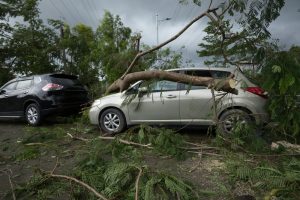
A parking spot that seems safe on an ordinary day may present very different risks when a hurricane brings heavy rain and strong winds. Where you park can also affect your vehicle’s exposure to flooding, high winds, falling trees and branches, and flying debris. That’s why preparing your car isn’t the only thing to think about when hurricane season arrives.
Good hurricane parking starts before the weather turns severe. Taking a few minutes to assess your parking spot, its surroundings, and potential risks can help you make a more informed decision about where to leave your vehicle.
In this guide, we’ll cover how to prepare a parking spot for hurricane season, what drivers should consider, and how hosts can make their spaces safer. We’ve also included hurricane parking checklists that you can use as a quick reference before a storm.
Preparing a parking spot for a hurricane doesn’t have to take much time or effort. A quick assessment of the space and its surroundings can help you identify obvious risks before a storm arrives. It’s also easier to make changes while conditions are calm than when heavy rain and strong winds are already affecting the area.
Start by considering the risk of flooding. Whenever possible, choose a parking location that’s away from low-lying areas, drainage paths, streams, and other places where water can collect. Check how water normally moves through the area after heavy rain and look for signs of poor drainage or previous flooding. You can also check local flood maps and emergency management resources to better understand the area’s flood risk. The National Weather Service provides guidance and advisories on hurricane safety and flood risks that can help you assess potential hazards in your area.
Next, look at what’s around the parking space. A covered or sheltered location may offer some protection from wind and rain, but it isn’t automatically safer. Check for trees with large or damaged branches, nearby structures, power lines, signs, outdoor furniture, and other objects that could fall or become airborne. If you’re considering a garage or covered parking area, make sure it doesn’t have its own flooding or structural risks. The Federal Emergency Management Agency (FEMA) recommends securing outdoor items and moving them indoors when a hurricane threatens.
Keep the area clear and accessible. Remove or secure loose items around the parking space, and make sure drainage paths aren’t blocked by debris. If the vehicle needs to be moved, there should also be a clear route out of the area. Consider whether roads or access points could become difficult to use after heavy rainfall or flooding. This is especially important if local officials issue an evacuation order. Know your evacuation route in advance and follow instructions from local authorities rather than waiting until conditions become dangerous.
These checks can help you determine whether your usual parking spot is appropriate for a storm. With the space assessed and prepared, drivers can then focus on making the right parking decision for their own vehicles.
Once you’ve assessed your parking options, the next step is deciding what to do with your vehicle. Drivers need to consider the timing of the storm, evacuation requirements, and how they might access their vehicle before and after the storm.
With these decisions in mind, you can turn your parking plans into a simple pre-storm routine. Use the Driver Hurricane Parking Checklist below to quickly review key preparation steps before a hurricane threatens your area.
Offering a parking space during hurricane season comes with a little more responsibility than simply making a spot available. Hosts should take reasonable steps to understand the condition of the space, communicate relevant information to drivers, and have a plan if severe weather changes the situation.
Good communication can make hurricane-season parking arrangements easier to manage, particularly when conditions change with little notice. The Host Hurricane Parking Checklist below provides a quick reference for reviewing your space and preparing for potential weather-related changes.
Hurricane parking is easier to manage when you make your decisions before conditions become hazardous. Assess your parking options early, give yourself time to relocate your vehicle if needed, and keep track of local forecasts and emergency guidance as conditions change. Drivers should be prepared to move their vehicles when necessary, while hosts should communicate promptly if a parking space becomes unsuitable. Official sources such as the National Weather Service and local emergency management agencies can provide the latest information for your area.
Before the next storm arrives, use WhereiPark’s Driver Hurricane Parking Checklist or Host Hurricane Parking Checklist to review your preparations.
Louise has worked across digital publishing, content marketing, and media, producing blog articles, news features, and educational resources. Her background includes writing for financial education platforms, technology publications, and global content teams. She has experience creating content for diverse audiences across international markets, adapting tone and structure to meet regional and platform-specific requirements. At WhereiPark, she produces content focused on parking, cost-saving strategies, and location-based services across the U.S. and Canada. Have any questions about content that you’d like to ask Louise? Drop her an email at Louise@spacer.com.
Louise has worked across digital publishing, content marketing, and media, producing blog articles, news features, and educational resources. Her background includes writing for financial education platforms, technology publications, and global content teams.
She has experience creating content for diverse audiences across international markets, adapting tone and structure to meet regional and platform-specific requirements.
At WhereiPark, she produces content focused on parking, cost-saving strategies, and location-based services across the U.S. and Canada.
Have any questions about content that you’d like to ask Louise? Drop her an email at Louise@spacer.com.
This will close in 0 seconds
This will close in 0 seconds